A luxury client’s guide to understanding the language of custom jewelry design.
Designing a custom piece of fine jewelry is an exciting and deeply personal journey. But if you’ve ever felt a little lost when your jeweler mentions “pavé,” “bezel,” or “VS1 clarity,” you’re not alone. Understanding basic jewelry terminology empowers you to communicate your vision with clarity and confidence.
At Lonnie’s, we believe education is part of the luxury experience. This guide will introduce you to key terms used in custom jewelry design — so you can collaborate with your jeweler like a pro.
💎 Diamond & Gemstone Terms
Cut
Refers to how a stone has been shaped and faceted — not its shape. A well-cut diamond reflects light beautifully. Popular cuts include brilliant, emerald, princess, and cushion.
Clarity
This measures the internal flaws (inclusions) or external blemishes of a diamond. Common clarity grades include FL (flawless), VS1–VS2 (very slightly included), and SI (slightly included).
Carat
The unit of weight for diamonds and gemstones. One carat equals 0.2 grams — but carat weight alone doesn’t determine value. Cut and quality matter, too.
Color
For white diamonds, color is graded on a scale from D (colorless) to Z (light yellow). The closer to D, the rarer and more valuable the stone.
Gemstone Treatments
Some stones are heat-treated or enhanced to improve appearance. Natural, untreated stones often command a higher value. Always ask your jeweler about origin and treatment.
💍 Setting Styles
Prong
Metal claws that grip and hold the stone in place, allowing maximum light exposure for brilliance.
Bezel
A sleek metal rim that encircles the stone, offering a secure and modern look.
Pavé
Tiny diamonds set closely together with minimal metal showing, giving the appearance of a “paved” sparkle surface.
Channel
Stones set between two metal strips — no prongs — for a clean, elegant look often used in wedding bands.
Halo
A ring of smaller diamonds surrounding a center stone to enhance size and brilliance.
🔧 Jewelry Design & Fabrication Terms
Casting
The process of forming your jewelry design in metal, often using a wax model created from a 3D CAD design or hand carving.
CAD (Computer-Aided Design)
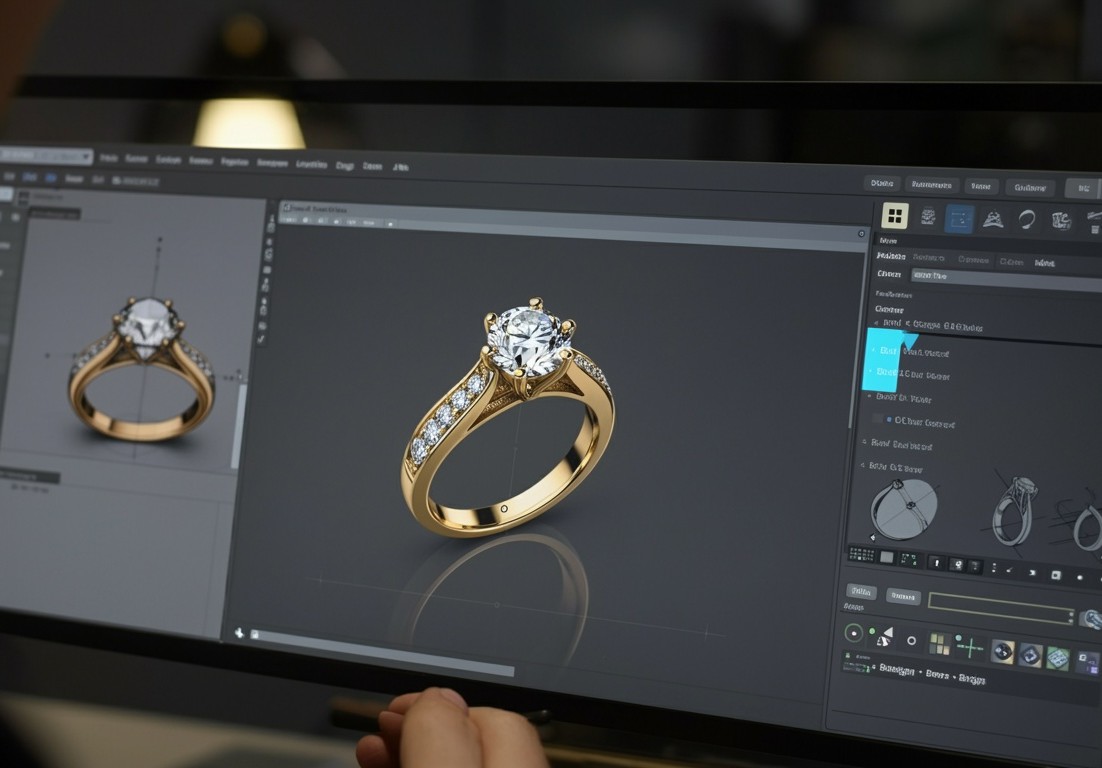
A digital rendering of your jewelry used to visualize and refine your piece before it’s physically created.
Polish
The final finishing of a piece — high polish gives a mirror-like shine, while satin or matte finishes offer a more subdued texture.
Engraving
Personal messages, symbols, or dates etched into your piece for a meaningful custom touch.
✨ Metal Options
18K vs. 14K Gold
18K gold contains more pure gold (75%) and has a richer hue, while 14K gold (58.3%) is slightly more durable. Both are excellent choices depending on your preferences.
Platinum
Heavier and more durable than gold, platinum is a premium choice known for its elegant, silvery-white sheen and hypoallergenic properties.
White Gold vs. Yellow Gold vs. Rose Gold
These are color variations based on alloy mixtures. White gold is plated with rhodium for brightness, while rose gold offers a warm, romantic tone.
Why This Matters for Your Custom Design
When you understand the terminology, you gain more control over the design process and can express your vision with greater precision. You’ll feel more confident evaluating options, asking the right questions, and making informed choices that reflect your taste and values.
At Lonnie’s, we take pride in guiding our clients through every step — translating their ideas into timeless, wearable works of art.
Ready to Start Designing?
If you’re thinking about creating a custom engagement ring, necklace, bracelet, or heirloom redesign, we’re here to help. With expert craftsmanship, ethical sourcing, and world-class service, Lonnie’s is where inspiration becomes reality.
📞 Book your private design consultation today or contact us for more details.